Ovarian Reserve Concerns and Fertility
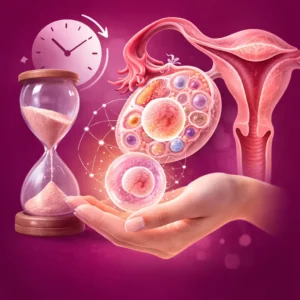 Ovarian reserve refers to the number and quality of eggs present in a woman’s ovaries. Every woman is born with a finite number of eggs, and this number gradually declines with age.
Throughout reproductive life, the ovaries release eggs during ovulation. Over time, both the quantity and quality of eggs naturally decrease, which may influence fertility potential.
Several factors may affect ovarian reserve and egg quality, including:
- age
- genetic factors
- hormonal balance
- metabolic health
- oxidative stress
- environmental exposures
Understanding ovarian reserve is important for couples who are planning pregnancy or experiencing difficulty conceiving.
Low AMH (Anti-Müllerian Hormone)
 Anti-Müllerian Hormone (AMH) is a hormone produced by small follicles in the ovaries. It is commonly used as a marker to estimate ovarian reserve.
AMH levels are measured through a blood test and may provide information about the number of developing follicles in the ovaries.
Lower AMH levels may suggest a reduced ovarian reserve.
However, it is important to understand that AMH does not directly measure egg quality or guarantee fertility outcomes.
Many women with lower AMH levels are still able to conceive, depending on several other factors including ovulation patterns, overall reproductive health, and the presence of other fertility conditions.
Current Medical Approaches for Low AMH
In modern fertility practice, women with low AMH are often advised to consider assisted reproductive technologies such as IVF.
Certain medications may also be used during fertility treatments to stimulate ovarian response.
However, ovarian reserve testing mainly reflects the number of remaining eggs, and treatment strategies often focus on maximizing egg retrieval rather than addressing broader factors influencing reproductive health.
Factors That May Influence Ovarian Reserve
While age remains the most significant factor affecting ovarian reserve, other influences may also play a role.
Oxidative Stress
Oxidative stress occurs when excessive free radicals damage cells in the body.
Egg cells are particularly sensitive to oxidative stress, which may affect their function and developmental potential.
Factors that may contribute to oxidative stress include:
- environmental pollution
- poor diet
- smoking
- chronic inflammation
- metabolic imbalance
Metabolic Health
Metabolic health influences hormone regulation and ovarian function.
Conditions such as insulin resistance or chronic inflammation may influence hormonal communication between the brain and ovaries.
Supporting metabolic balance may contribute to maintaining reproductive health.
Environmental Factors
Exposure to environmental toxins such as pesticides, plastics, and industrial chemicals may affect endocrine signaling and reproductive health.
These chemicals are sometimes referred to as endocrine disruptors because they may interfere with hormonal communication in the body.
Reducing exposure to environmental toxins may support overall reproductive wellness.
Poor Egg Quality and Fertility
Egg quality plays a crucial role in fertility because it directly influences fertilization, embryo development, and the chances of a healthy pregnancy.
While ovarian reserve refers to the number of eggs remaining in the ovaries, egg quality refers to the health and functional capacity of those eggs. Even when the number of eggs is lower, healthy egg quality can still support successful fertilization and embryo development.
Each egg contains genetic material and cellular structures that must function properly for fertilization to occur and for an embryo to develop normally.
One of the most important components of egg health is the mitochondria, which are the energy-producing structures inside the egg. Mitochondria provide the energy required for cell division and early embryo development.
When mitochondrial function is strong, the egg is better able to support fertilization and early pregnancy.
Factors That May Influence Egg Quality
Egg quality can be influenced by several biological and lifestyle factors that affect the internal environment in which eggs develop.
Oxidative Stress
Oxidative stress occurs when there is an imbalance between free radicals and the body’s natural antioxidant defenses.
Egg cells are particularly sensitive to oxidative stress because they remain in the ovaries for many years before ovulation occurs. Excess oxidative stress may affect cellular structures and genetic stability within the egg.
Factors that may increase oxidative stress include:
- environmental pollution
- smoking
- poor nutrition
- chronic inflammation
- metabolic imbalance
- long-term stress
Reducing oxidative stress and supporting the body’s antioxidant systems may help support cellular health.
Metabolic Health
Metabolic health plays an important role in hormone regulation and ovarian function.
Conditions such as insulin resistance, chronic inflammation, and blood sugar imbalance may influence the hormonal signals that regulate egg maturation and ovulation.
Maintaining metabolic balance may support the environment in which eggs develop within the ovaries.
Hormonal Balance
Hormones such as FSH, LH, estrogen, and progesterone regulate the development and maturation of eggs during the menstrual cycle.
Disruptions in hormonal balance may affect how follicles develop and how eggs mature before ovulation.
Supporting hormonal balance is an important aspect of reproductive health.
Lifestyle and Environmental Factors
Modern lifestyle patterns may influence reproductive health through several pathways.
Factors that may affect egg quality include:
- poor sleep patterns
- chronic stress
- exposure to endocrine-disrupting chemicals
- nutritional deficiencies
- sedentary lifestyle
Over time, these factors may influence hormonal balance, cellular health, and reproductive function.
Supporting Egg Health
Egg development occurs over several months before ovulation. During this time, the egg is influenced by the overall internal environment of the body.
Supporting egg health may involve focusing on factors such as:
- balanced nutrition
- antioxidant-rich foods
- metabolic health
- regular physical activity
- stress balance
- adequate sleep
- reducing exposure to environmental toxins
By improving the internal environment in which eggs develop, it may be possible to support overall reproductive health.
The Heal360 Perspective
At Heal360, we view fertility as a reflection of the body’s overall health.
Our approach focuses on supporting the internal environment that influences egg development through the SBH framework — Soul, Body, and Hormones.
Soul
Supporting emotional well-being and reducing chronic stress that may affect hormonal communication.
Body
Optimizing nutrition, metabolic health, and lifestyle patterns that influence cellular and reproductive health.
Hormones
Supporting the hormonal balance that regulates ovulation and egg maturation.
By addressing these interconnected factors, the goal is to support the conditions that allow eggs to develop in a healthier internal environment.
Age-Related Fertility Decline
Age and Female Fertility
Female fertility naturally declines with age due to gradual reductions in ovarian reserve and egg quality. Women are born with approximately 1–2 million eggs, and this number gradually decreases over time. By puberty, the number of remaining eggs is significantly lower, and the ovarian reserve continues to decline throughout reproductive life.
Fertility changes often become more noticeable after the mid-30s, as both the number and quality of eggs may decrease with time.
However, it is important to understand that age alone does not fully determine fertility potential. Many other factors influence reproductive health, including metabolic health, hormonal balance, lifestyle patterns, nutritional status, and overall physical well-being.
Just as overall physical fitness can vary widely between individuals of the same age, reproductive health can also vary significantly. Some people may experience health challenges earlier if lifestyle and metabolic health are not well supported, while others maintain strong physical health well into later years by actively caring for their bodies.
Similarly, reproductive health is influenced by the internal environment of the body, including factors such as oxidative stress, inflammation, metabolic balance, and hormonal regulation.
Historically, it was not uncommon for women to conceive in their early to mid-40s, particularly in environments where lifestyle patterns, physical activity, and nutrition supported overall health. While fertility patterns can vary widely between individuals, maintaining overall health may support the body’s natural reproductive function for longer.
At Heal360, we focus on supporting egg health and the reproductive environment by addressing factors such as:
- metabolic balance
- hormonal regulation
- lifestyle patterns
- nutritional health
- stress management
The goal is to support the body’s natural reproductive potential by improving the conditions that influence egg development and hormonal balance.
While ovarian reserve changes naturally with time, focusing on overall health may help support the environment in which eggs mature and ovulation occurs.
Supporting Ovarian Health
Although ovarian reserve naturally declines with age, overall reproductive health is influenced by multiple factors.
Supporting ovarian health may involve focusing on areas such as:
- metabolic health
- nutritional balance
- reducing oxidative stress
- maintaining hormonal balance
- managing chronic stress
- supporting overall lifestyle health
These factors may influence the environment in which eggs develop and mature.
The Heal360 Approach
At Heal360, we focus on understanding the factors that influence reproductive health through our SBH framework — Soul, Body, and Hormones.
Our approach emphasizes:
Soul
Supporting emotional well-being and reducing chronic stress that may affect hormonal signaling.
Body
Improving metabolic health, nutrition, and lifestyle patterns that influence reproductive function.
Hormones
Supporting balanced hormonal communication between the brain and reproductive organs.
This integrative perspective focuses on supporting the internal environment that influences fertility and overall reproductive wellness.
Final Thoughts
Ovarian reserve concerns such as low AMH or poor egg quality can raise important questions for couples trying to conceive.
While ovarian reserve naturally changes with age, fertility potential is influenced by a combination of biological, hormonal, metabolic, and lifestyle factors.
Understanding these influences may help couples explore ways to support reproductive health and make informed decisions regarding their fertility journey.

